
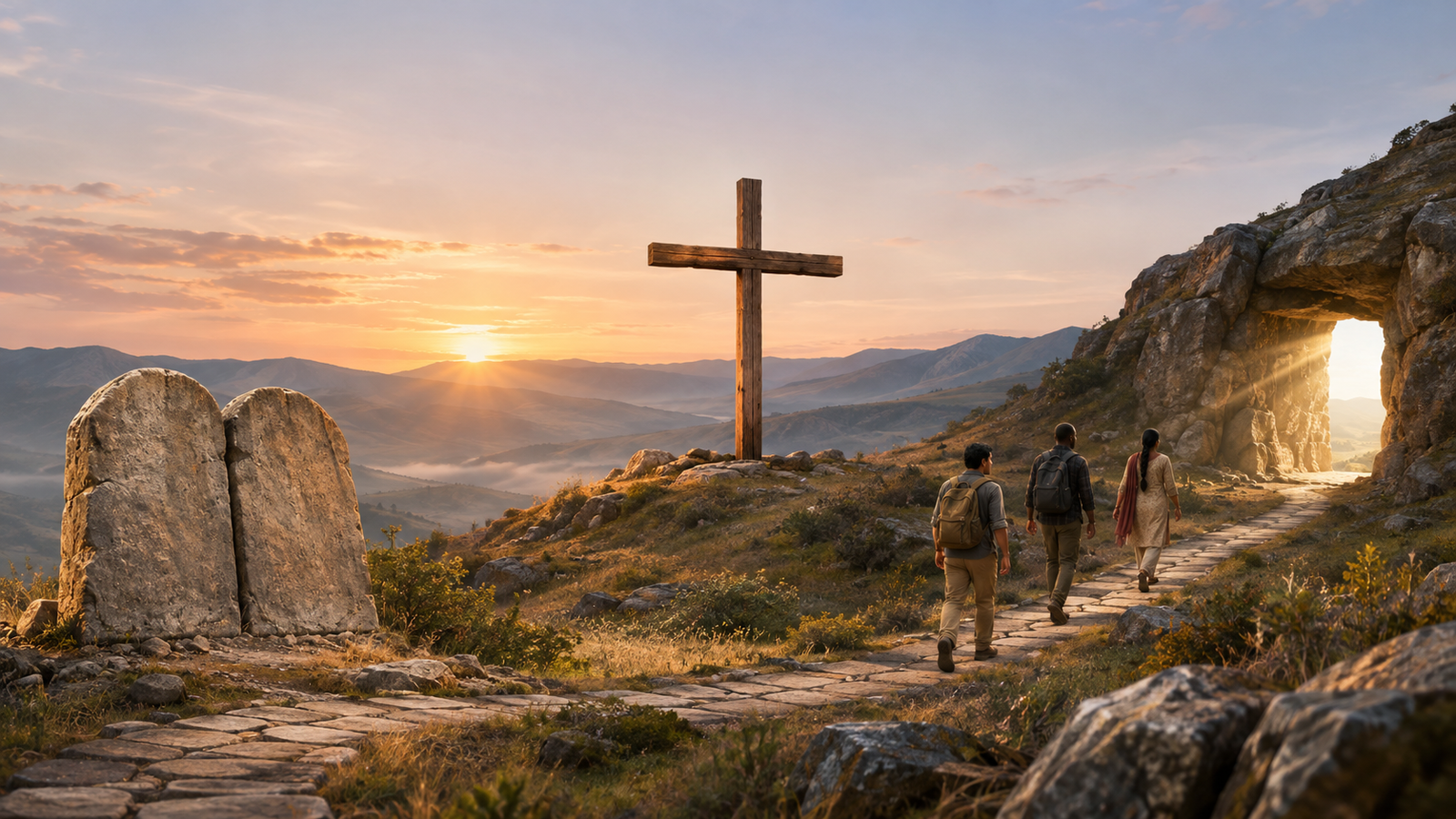
Forgiveness Is Not The Final Stage
From Grace to KingdomOne thing that really concerns me is how easy it is for us to get comfortable with the way God worked in one age and then assume that He has to keep working that same way forever.
That is where we can get ourselves into trouble.
If we only understand one stage of God's work, then we are only seeing one part of His disposition and one part of His plan. We can become so attached to what we already know that anything different feels wrong to us, even if it is coming from God.
That should make all of us stop and think.
God's work with mankind has never been random. It has been moving forward according to His plan. Each age had a purpose. Each stage completed something that had to be done before the next stage could begin.
And what is important to understand is that the people in one age did not necessarily know exactly what the next age would look like.
That is part of the reason people have resisted God's work before.
They knew what God had done yesterday, but they could not recognize what He was doing today.
The Age of Law Had a Purpose
In the Age of Law, mankind needed direction.
People needed to know what God required of them. They needed boundaries. They needed to know what was right and wrong and how they were supposed to live before God.
So Jehovah gave Moses the laws and commandments.
That work was necessary because people were still immature in their understanding of God. The law helped control and guide them. It showed them how to live and also showed them what sin was.
But there was a problem.
Knowing the law did not mean people could keep it.
The law could show people what sin was, but it could not completely solve the problem of sin.
That stage had done what it was supposed to do.
And because it had done its job, mankind was ready for the next stage.
Then Came the Age of Grace
When Jesus came, the work changed.
That did not mean God had changed into somebody else. It meant the work had moved forward.
The Age of Grace was about redemption.
Mankind already knew what sin was because the law had revealed it. Now mankind needed forgiveness.
That is why Jesus came as the sin offering.
During that stage, people experienced God's mercy, patience, love, forgiveness, compassion, and forbearance in a very powerful way.
Jesus came to redeem sinners.
And because of His sacrifice, people could come before God, confess their sins, and receive forgiveness.
But I think this is where many people stop.
We act as though forgiveness was the end of the whole plan.
It was not.
A person could be forgiven and still be prideful.
Forgiven and still lie.
Forgiven and still be selfish.
Forgiven and still be rebellious.
Forgiven and still resist God.
So, while the Age of Grace dealt with the guilt of sin, it did not completely remove the corrupt nature that keeps producing sin.
That meant there was still more work to be done.
The Age of Kingdom Is Different for a Reason
This is the part that people may not want to hear.
We have become very comfortable with grace.
We like hearing that God loves us.
We like hearing about forgiveness.
We like hearing about mercy.
We like hearing that God understands our weakness.
All of that is true.
But we can not take what God revealed in the Age of Grace and decide that this is the only way He can ever work.
The Age of Kingdom has a different purpose.
This is the stage of judgment and chastisement.
And that should tell us something.
God is no longer only dealing with the fact that we sinned. He is dealing with what is inside us that keeps producing sin.
Pride.
Rebellion.
Dishonesty.
Selfishness.
Religious ideas.
Resistance to God.
The things we excuse.
The things we hide.
The things we may not even recognize in ourselves.
God is exposing those things because He intends to deal with them.
And that is why this age can feel much harder.
God is not simply comforting us.
He is showing us who we really are.
This Is What Worries Me
I think too many people are still approaching God as though we are permanently living in the Age of Grace.
We want God to forgive us again.
And again.
And again.
But what if God is saying, "I have already done the work of redemption. Now I am dealing with the thing in you that keeps bringing you back to the same sin"?
That changes the conversation.
Now it is not only about asking God to forgive me.
It is about asking whether I am willing to let Him expose me.
Correct me.
Judge what is wrong in me.
And change me.
That is much more uncomfortable.
But if the purpose of this stage is purification, then God can not keep coddling us and pretending everything is fine.
He has to let us know where we really stand with Him.
Not where we think we stand.
Not where our church says we stand.
Not where our doctrine tells us we stand.
Where do we actually stand with God?
That is the question.
God Is Not Wasting Time Repeating the Same Work
When I say God is not wasting time with forgiveness, I do not mean forgiveness has no value.
It absolutely does.
The point is that the work of redemption has already been accomplished.
Jesus completed that work.
So God is not spending the final stage simply repeating what has already been done.
There is another purpose now.
If God only kept forgiving mankind forever, when would mankind ever be changed?
When would rebellion be removed?
When would pride be removed?
When would our corrupt disposition be dealt with?
At some point, the problem itself has to be addressed.
That is what judgment does.
Forgiveness allows us to come before God.
Judgment shows us what still needs to change.
Chastisement confronts what is wrong.
Truth exposes what we can not see on our own.
And through that process, people who truly want God can be changed.
Each Age Prepared the Way for the Next
When you look at it from beginning to end, the progression makes sense.
The Age of Law showed mankind what God required.
It revealed sin.
The Age of Grace provided redemption and forgiveness.
It brought mankind back before God.
The Age of Kingdom goes deeper.
It deals with the corruption that still remains inside mankind.
So each stage had a job.
The law prepared the way for grace.
Grace prepared the way for judgment and purification.
And judgment is preparing people for the completion of God's work.
That is why we can not take one age and make it the whole story.
The Danger Is Holding On to Yesterday
This may be the biggest lesson of all.
People can believe in God and still resist God.
That has happened before.
People studied Scripture.
They defended their beliefs.
They were waiting for the Messiah.
And when Jesus came, many of them rejected Him.
Not because they did not believe in God.
They rejected Him because what He was doing did not match what they thought God should do.
That should scare us a little.
Because we can do the same thing.
We can become so comfortable with the God we learned about yesterday that we fail to recognize what He is doing today.
We can say:
"God would never judge like that."
"God would never speak that strongly."
"God is only love."
"Jesus already forgave me, so there is nothing else God needs to do."
But the real question is this:
Are we describing God as He truly is, or are we describing the part of God we became comfortable with during one stage of His work?
That is a serious difference.
This Is Why the Three Stages Matter
The three stages show the whole picture.
The Age of Law taught mankind what God required.
The Age of Grace redeemed mankind.
The Age of Kingdom judges, exposes, and purifies mankind.
Different work.
Different purpose.
Different expression of God's disposition.
But the same God carrying out one plan.
That is why I believe we have to be very careful about becoming comfortable.
If this truly is the final stage of God's six-thousand-year plan, then this is not the time to keep asking only:
"Will God forgive me?"
Maybe the question we need to be asking now is:
"When God shows me what is still wrong inside me, am I willing to accept it and let Him change me?"
Because forgiveness is comforting.
Judgment is not.
But if God's purpose is to completely save and transform mankind, then at some point He has to show us exactly where we stand.
And we need to be ready to hear the answer.